In our summary, the history of the farm begins in 2015, with the initial recovery of a vineyard that had been destroyed by a fire years earlier. Of course, for those willing to read on, there is much more. This account, which does not aim to be a formal historiography, draws from sources typical of that discipline, from direct and indirect memories, from logic and deduction, and from books or fragments personally recovered.
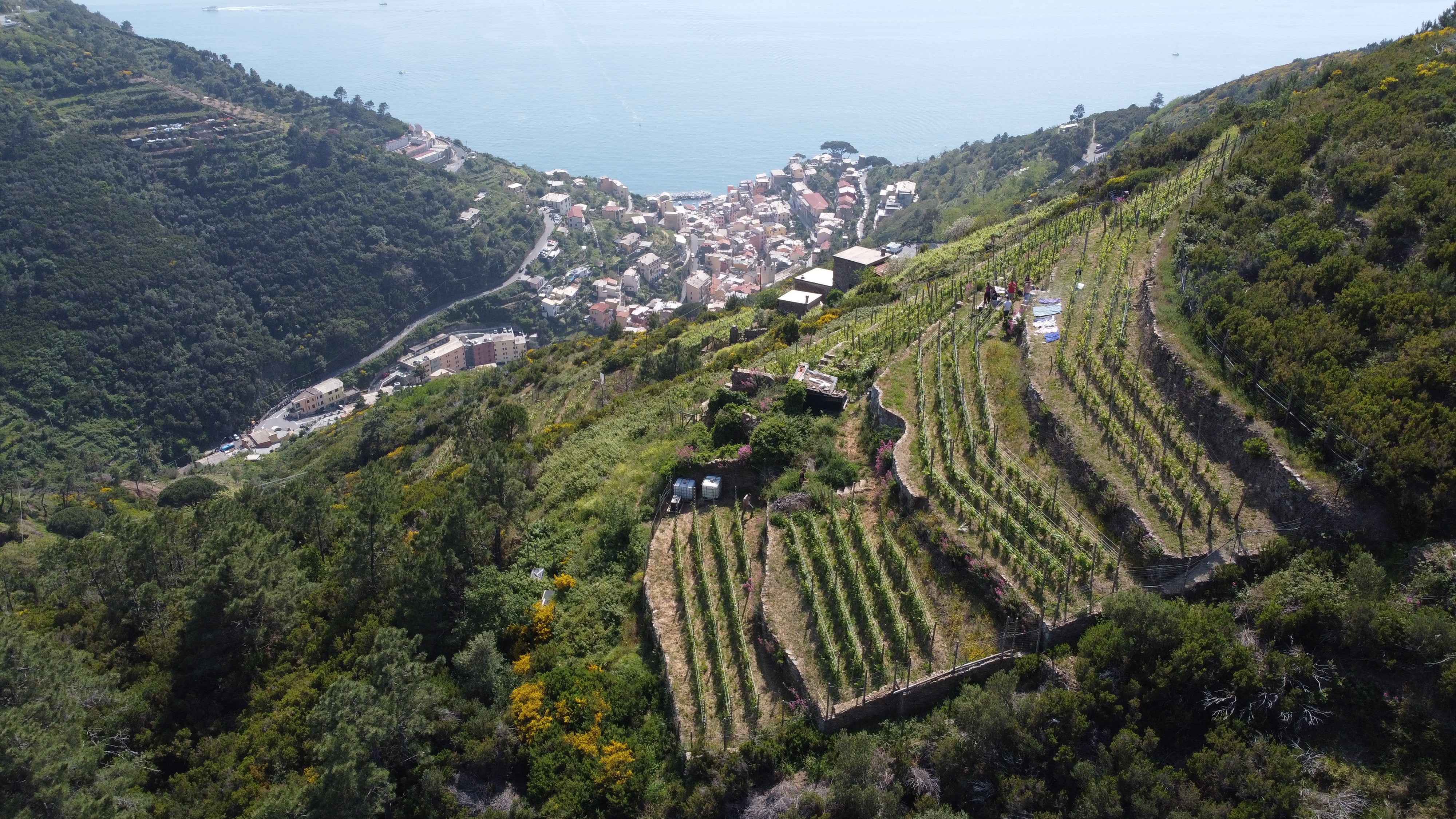
We begin by saying that the real history of the farm is even more recent, as Finis Terrae was officially founded in 2020 with its first wine production: those 420 painstakingly crafted bottles, obtained from two vineyards on the slopes of Costa Novale, Riomaggiore. For convenience, the upper vineyard, recovered after the fire and central to this story, will henceforth be referred to as the “high” vineyard (about 270 m above sea level), while the inherited lower vineyard, which we mention here for the first time, will be called the “low” vineyard (around 220 m above sea level).
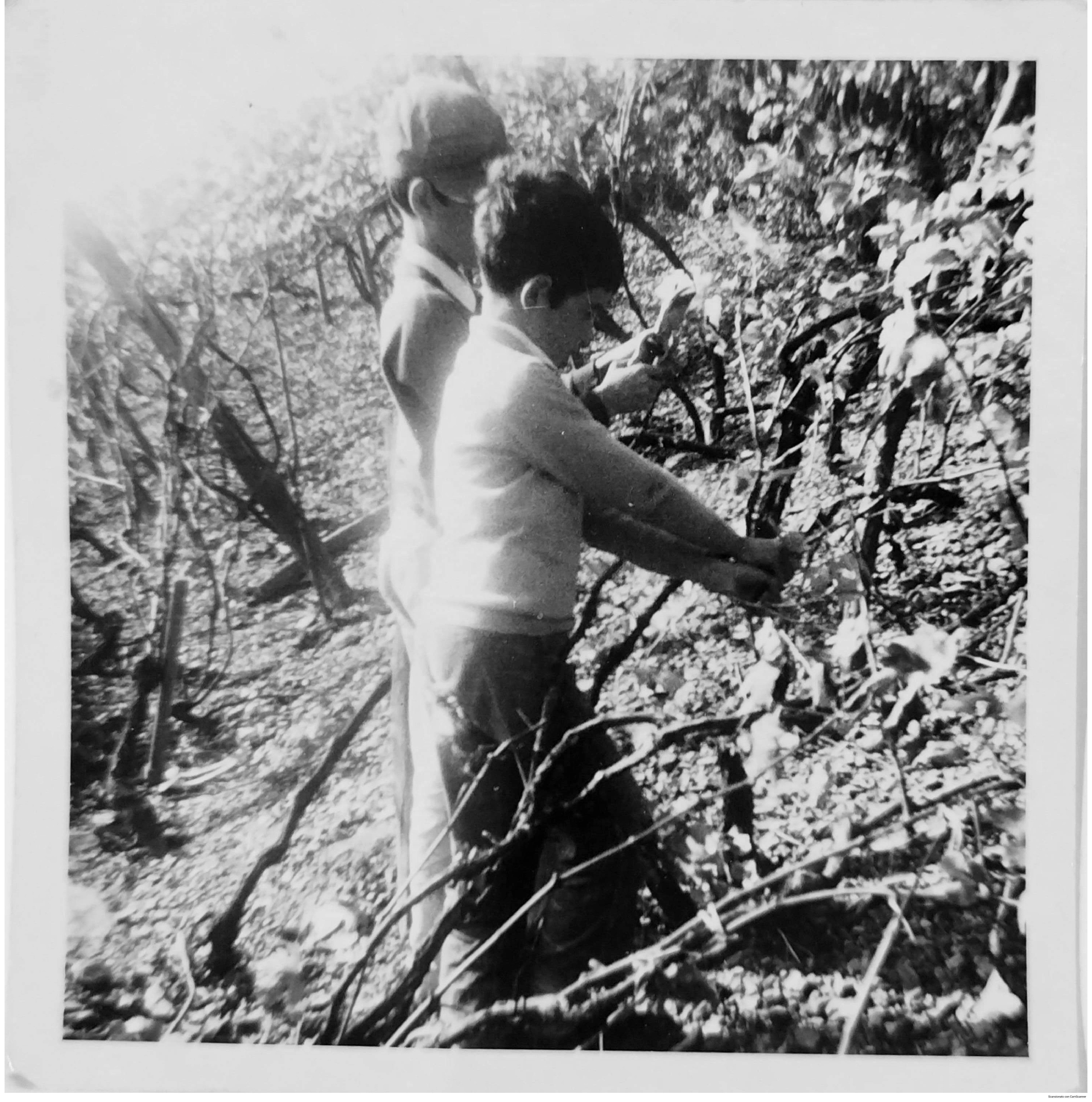
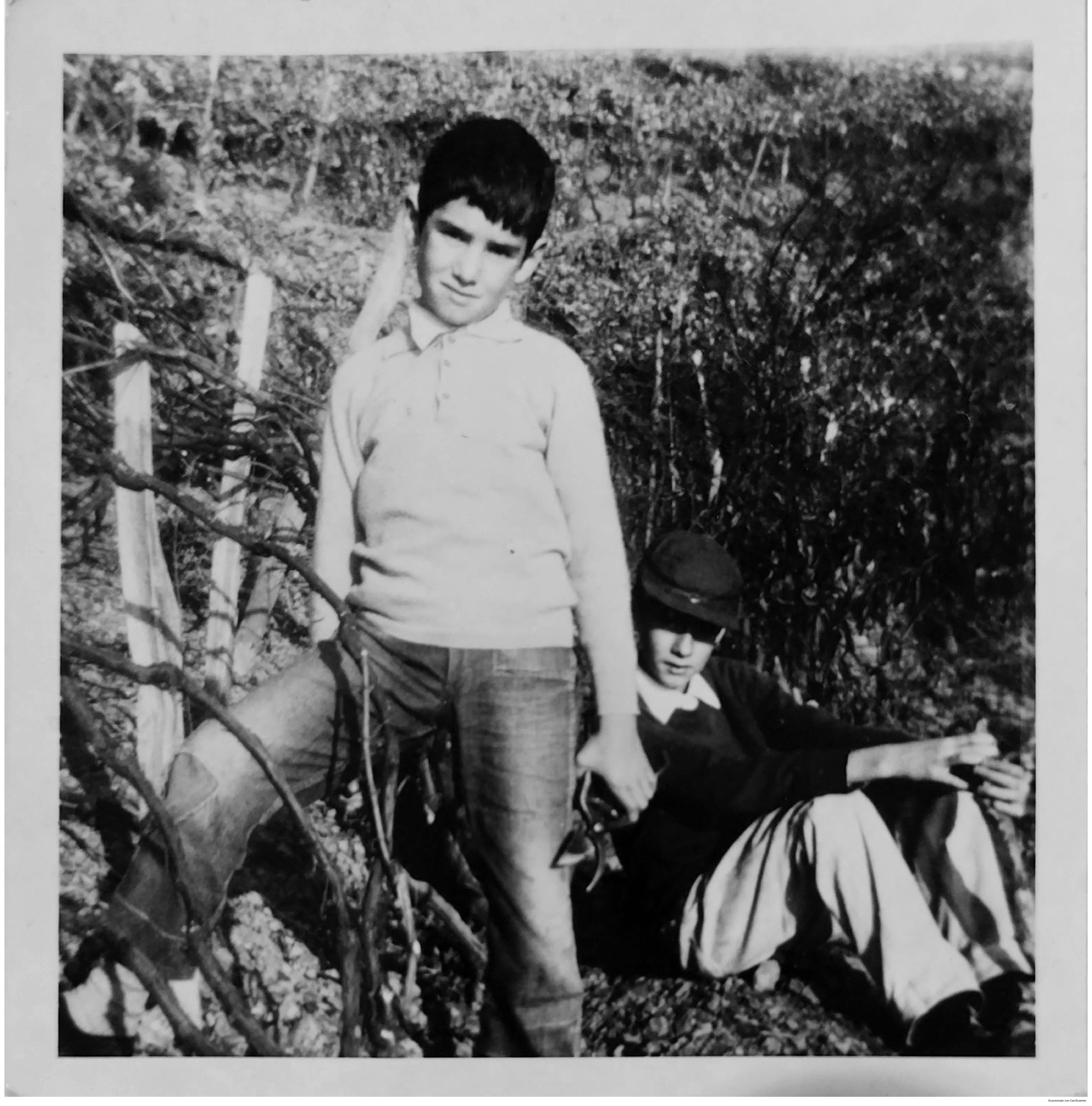
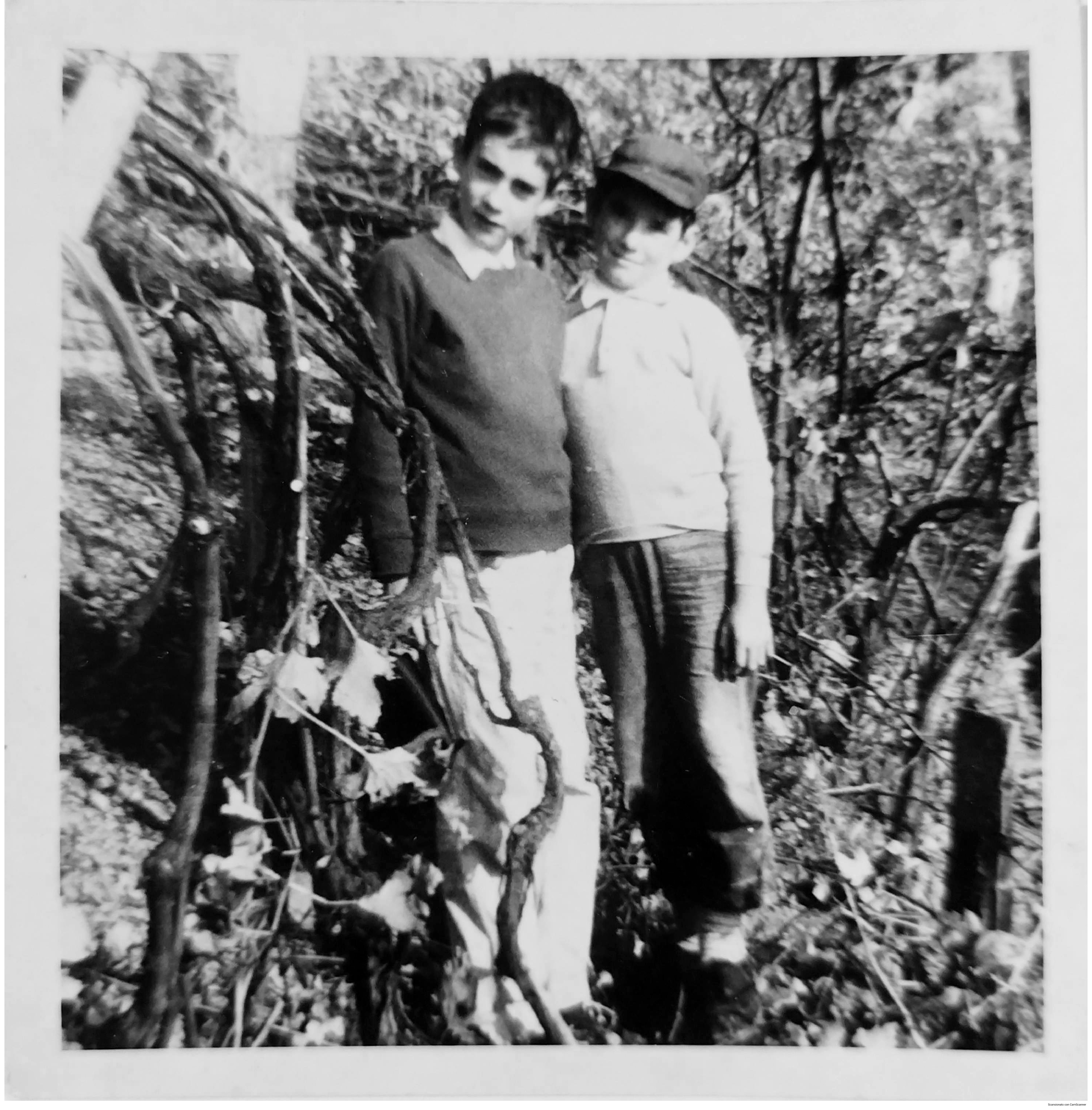
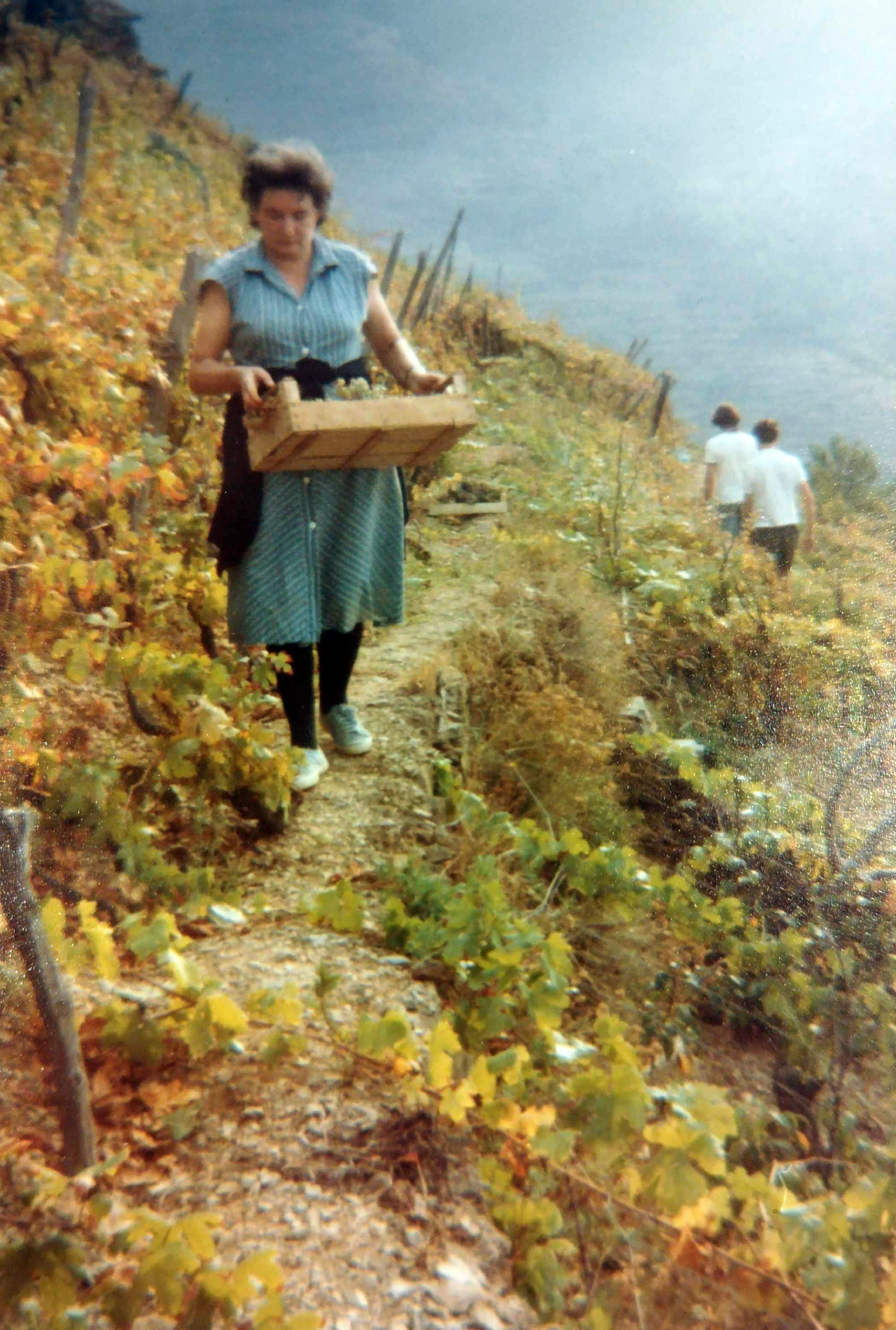
It would be inappropriate and contrary to our initial intent to make definitive claims about what agricultural work meant to this third generation, particularly vineyard work, but it certainly was one of the activities that allowed for daily sustenance. A clearer picture emerges for the next generation, that of Giuseppe and Elva, who, even though they found work opportunities in La Spezia in the postwar period, still had internalized the idea that vineyard labor was essential for their own economy. This first or second job, in fact, was not merely about carrying on traditions but a substantial source of income derived from selling their products: grapes, wine, Sciacchetrà (which probably at the time had not yet assumed that name, the result of later labeling to define its history, characteristics, and commercial identity, but was simply called Refursà). This last product also functioned as barter for services perceived as high-value, such as those of doctors, notaries, and lawyers (no different from Renzo’s capons for the azzeccagarbugli, Quibbleweaver, a sort of lawyer, in the classic Italian historical novel The Betrothed). It is important to understand that, while today the preservation of traditions holds great value and is an aspiration, for this generation vineyard work was still a necessity, or at least perceived as such, a legacy ingrained and experienced over time.
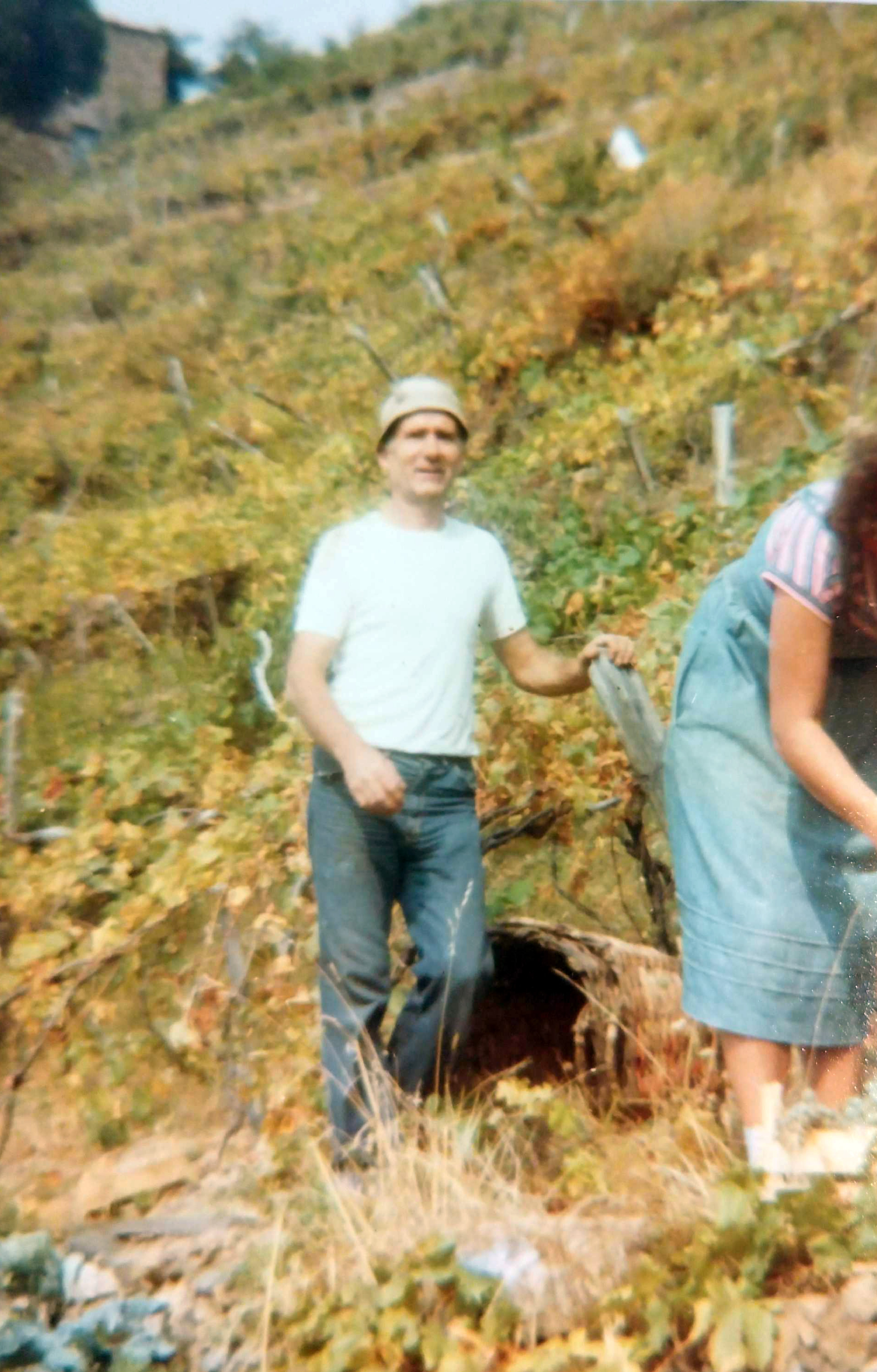
Finally, with the generation of Umberto and Gianfranco, as work opportunities became increasingly comprehensive, agricultural labor moves from being a necessity to a more hobby-like pursuit, with traditions kept alive. Many were likely unaware they were preserving such customs, simply continuing because it was the normality they had been raised in, a kind of inertia without deliberate intent (not necessarily less satisfying or enjoyable). While Umberto preferred more physical tasks like hand hoeing, Gianfranco chose to care for the vineyard in its entirety. It was he who maintained the vineyards alongside his father Giuseppe and later alone. The key concept to focus on for the continuation of our story is maintenance: unfortunately, once the high vineyard was destroyed by fire, continuing this work was not feasible, as recovery would have required far more time and effort, limiting attention to the lower vineyard that survived the flames.
By late July 2015, in less-than-ideal conditions, Luca and a few friends embarked on a foot inspection to locate the plot, which had become so overgrown that pioneer plants and shrubs had rendered it indistinguishable from the surrounding forest and Mediterranean scrub. Although a rack railway existed to aid farmers in the Cinque Terre with landscape and agricultural maintenance, the recovery began from the path leading to the high fields, lost amidst the vegetation just above the lower plots.
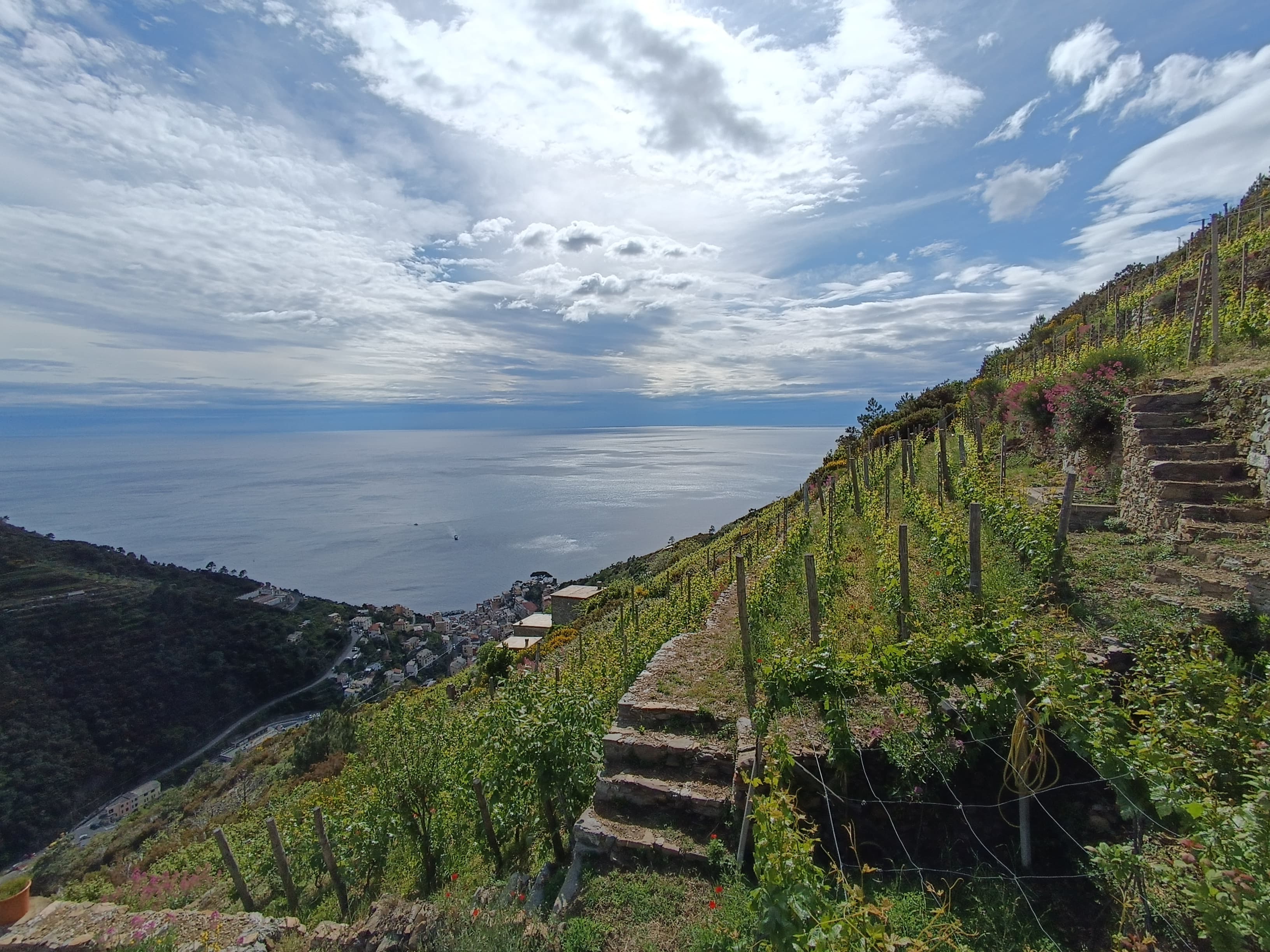
A long digression is necessary here: why Costa Novale? Costa Novale is a slope descending from the summit of the mountain at Campione down to the village of Riomaggiore, south-southeast facing, exposed to both mountain and sea winds, influenced by the maritime climate, yet already at a significant altitude. It was chosen not only for these viticulture-friendly conditions by generations we cannot fully trace but also for logistical reasons. The trail network of the Cinque Terre National Park, though in some points abandoned—especially stairways and paths leading to long-unused plots—is still extensive and well-maintained enough to provide a comprehensive view of the routes our ancestors used.
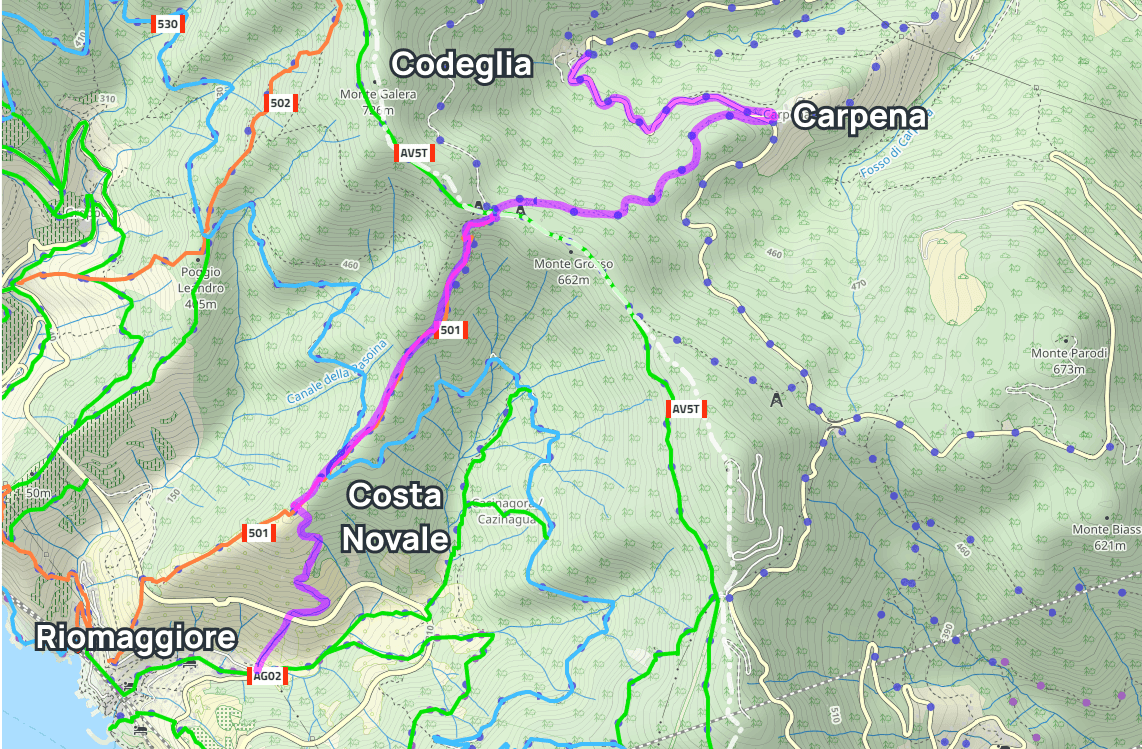
Examining the list of paths, a familiar trend emerges. The trail from Riomaggiore, near the current Carabinieri station, leads to the coastal road at the start of the Zorza straight; its continuation, uninterrupted before the coastal road was built, from the Tassonara rack railway departure up to the ridge above Costa Novale, connecting to trail 501; the 501 trail bisecting the Strada dei Santuari at Campione and proceeding toward the mountain summit at Sella della Croce / Foce; and finally, the stretch descending inland to San Benedetto via the villages of Carpena and Codeglia. Logistically, this shows how cultivating plots on the Cinque Terre heights by residents from the Val di Vara was feasible. Giuseppe himself hailed from the village of Codeglia.
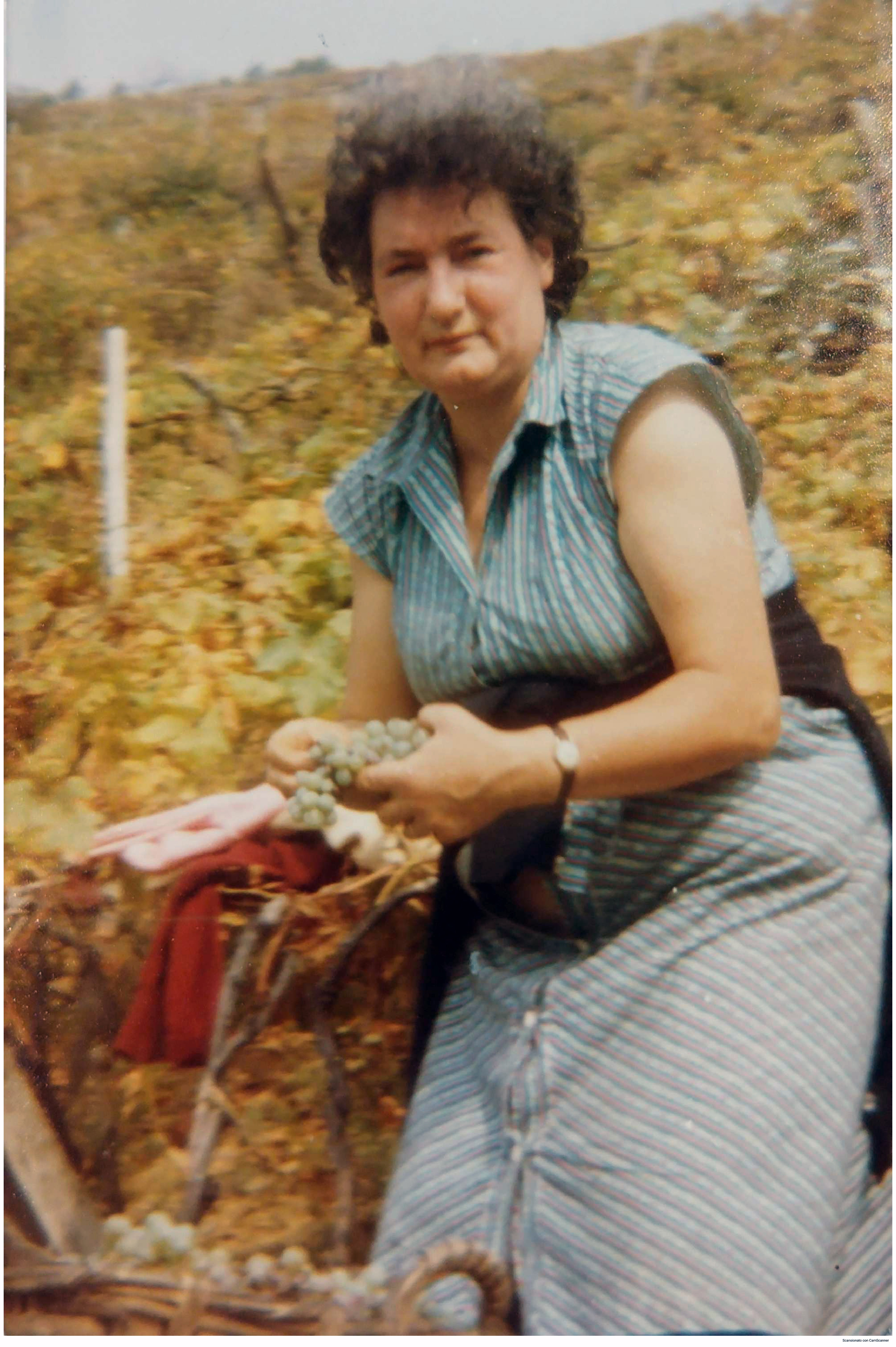
At this point, trying not to lose the thread of the story, a few suggestions can be added:
The first, and briefest, is the evidence that the Cinque Terre were built from the heights down to the sea, and not the other way around, as one might logically expect from the ancient history of civilizations that grew along rivers. In this regard, see the studies on ancient settlements such as Cacinagora.
The second suggestion is that the route described earlier was indeed known as the “milk path” (a plausible etymology also applies to the Cacinagora settlement just mentioned) —that is, the path along which the milkmaid carried milk from the inland villages (from places like San Benedetto, Carpena, and Codeglia) down to Riomaggiore. It was thus an established route, not a mere reconstruction.
It is also worth reflecting on the nature of the sources and their reliability, as well as the less explicit reasons why this account is being written (hence the occasional parenthetical digression). This issue is not new for those working in historiography, and it would be too vast and technical to treat fully here. What is peculiar in our small context, however, is how much this phenomenon is inflamed. The first point to note is that the name “Cinque Terre” sells and attracts visibility; even if this use is not always well-intentioned, it is understandable that it happens. The second, more relevant point within our control, is that even where good faith prevails, rather than improper commercial interests, one often ends up in a romanticized rhetoric. Under the label of “heroic viticulture” and the many words associated with it (from “hard work” to the more modern term “resilience”), this has the effect of standardizing and emptying of meaning what was actually done in the past. Labels are aimed at an audience seeking instant, concentrated emotion—brief epithets sprinkled with grandeur, immediacy, and spectacle, like the trailer of an epic film that will never be seen.
In gathering sources for this account—done at a hobbyist rather than professional level—it became evident that many pieces of the history of viticulture and life in the Cinque Terre have been lost. Between the world wars and the fortunate advent of the Cinque Terre DOC thanks to the work of many pioneers, many fragments of knowledge disappeared. These fragments were necessary for telling the story of a product, and often, in good faith, errors have been made (the same that the author of this account may be committing), likely also influenced by psychological biases induced by the context created by the labels discussed above. For example, the autedo, or pergola, is now considered the traditional method of vine training in the Cinque Terre, while verifiable sources suggest it was introduced just over a century ago; the practice of drying red grapes for what would now be called “red Sciacchetrà” was lost, among other things.
This romanticized storytelling elevates our ancestors—and the few current farmers—into heroes.
The paradox is that, by glorifying them, we risk stripping them of their real skills and labor, filling gaps in knowledge with embellishments, and overlooking much that they actually accomplished.
Keeping this in mind, we can return to the story of the milkmaid: it is not implausible that she carried a jug of milk along this path for the sheer number of steps and the labor involved at the time, but it is more realistic to consider the small quantity of milk that could be transported and its limited usefulness to a town like Riomaggiore, which, while it may not have had cows, certainly had sheep and goats to produce some milk. A less romanticized view would consider larger quantities carried by mules or focus more on dairy products than milk itself. For further context, one can look at the “milk route” in Monterosso, which, while niche, is documented and can serve as a comparative model, adapted to Riomaggiore.
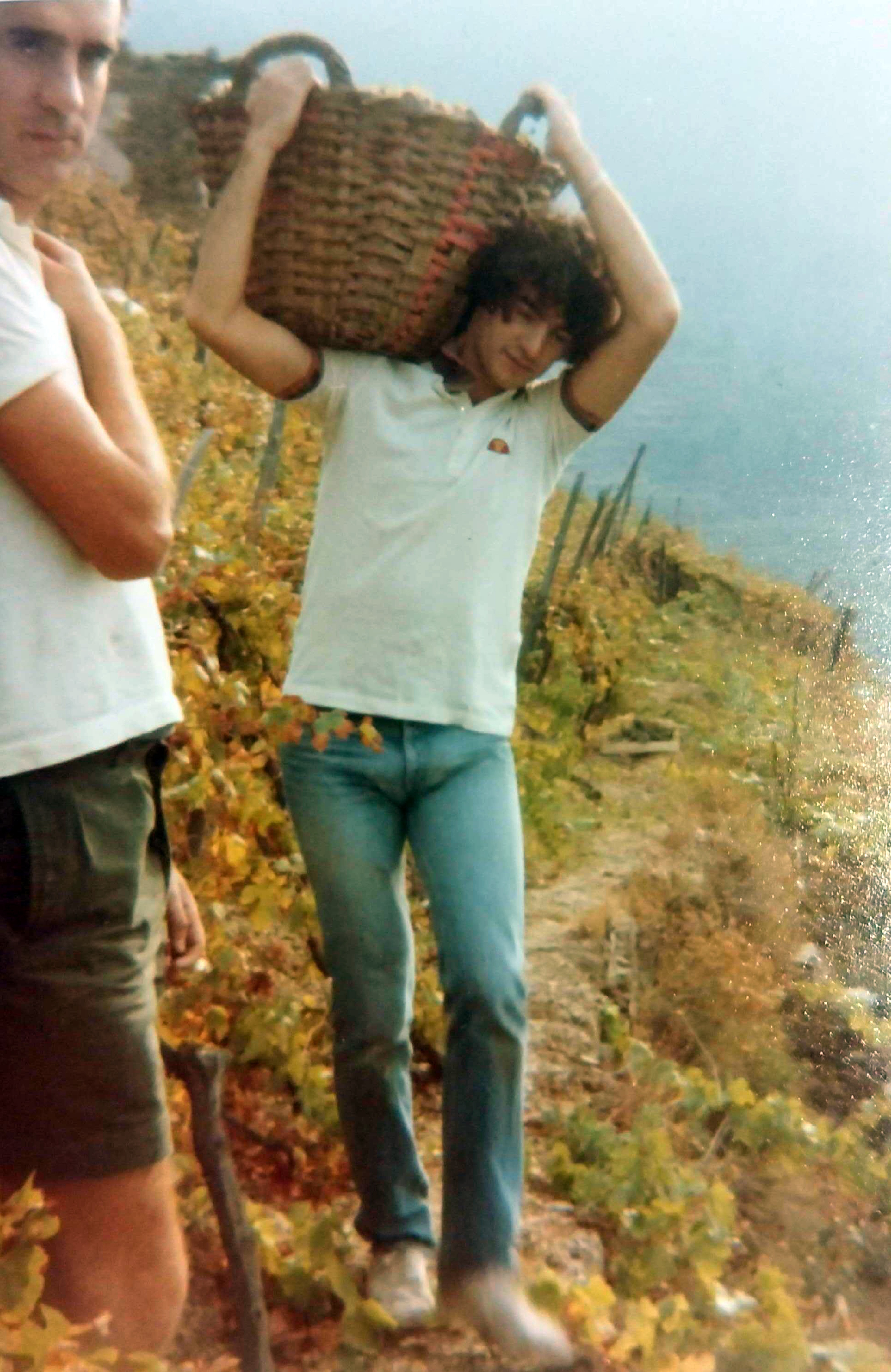
At mid-slope, residential settlements existed. In Costa Novale, near the high fields, a conspicuous ruin remains: a three-story house with an adjacent livestock-barn. Its collapse, except for the perimeter walls, is relatively recent; Umberto and Gianfranco saw it in use, and Giuseppe relied on it in his agricultural work. These were not permanent residences but lodgings for intensive work days. More laborious tasks required staying on-site for several days, with multiple family units each occupying a floor and managing surrounding plots. Giuseppe, Elva and many predecessors tended the seaside plot of about 2,000 m²—the same destroyed in the early 2000s fire we started from.
In earlier times, building materials for dry stone walls supporting terraces were sourced locally.
When extraction sites were depleted or deemed unsuitable, they were abandoned and evocatively called “ravaneto” (from the dialect “ravanare,” to scrape the ground for anything usable). These abandoned sites, shaped like foundation trenches, were often reused for building the temporary lodgings described above.
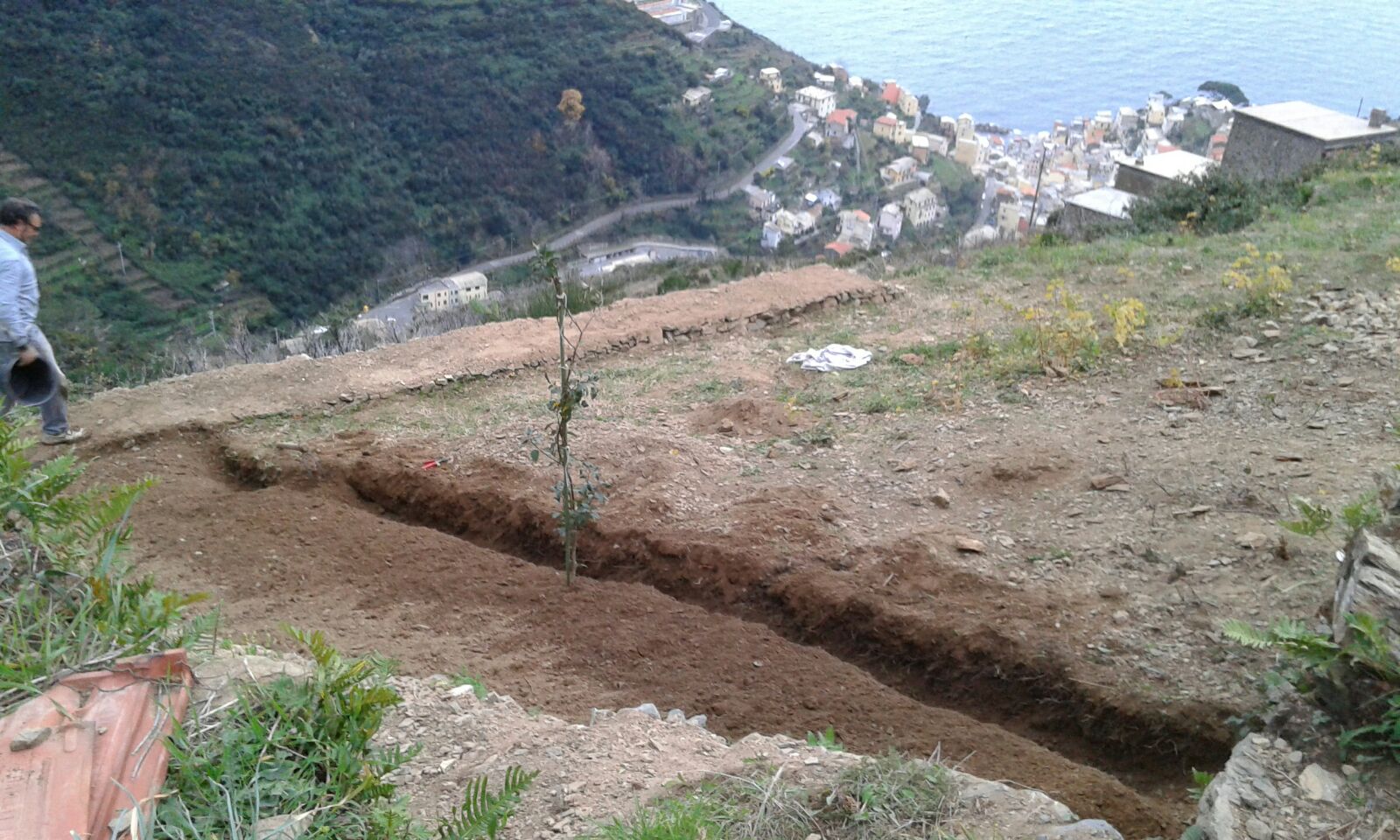
By early August 2015, the trail from the rack railway to the high fields was cleared, reaching the plot. Gradually, the land was cleared of brush, and Umberto began hand-hoeing, starting with the two lower fields and then the entire plot. Luca had originally planned to plant olive trees, a low- maintenance crop he was familiar with from spending his childhood more with his maternal grandfather, Adriano, who tended a centuries-old olive grove in the hills near La Spezia, rather than with his paternal grandfather, Giuseppe, who was devoted to viticulture. However, Simone, one of the friends who had joined him in scouting the land, persuaded him to restore the vineyard instead. Building on the groundwork laid by his father’s hoeing, Luca personally rebuilt the dry stone walls, replanted the vines, and over time revived the overall structure of the vineyard.
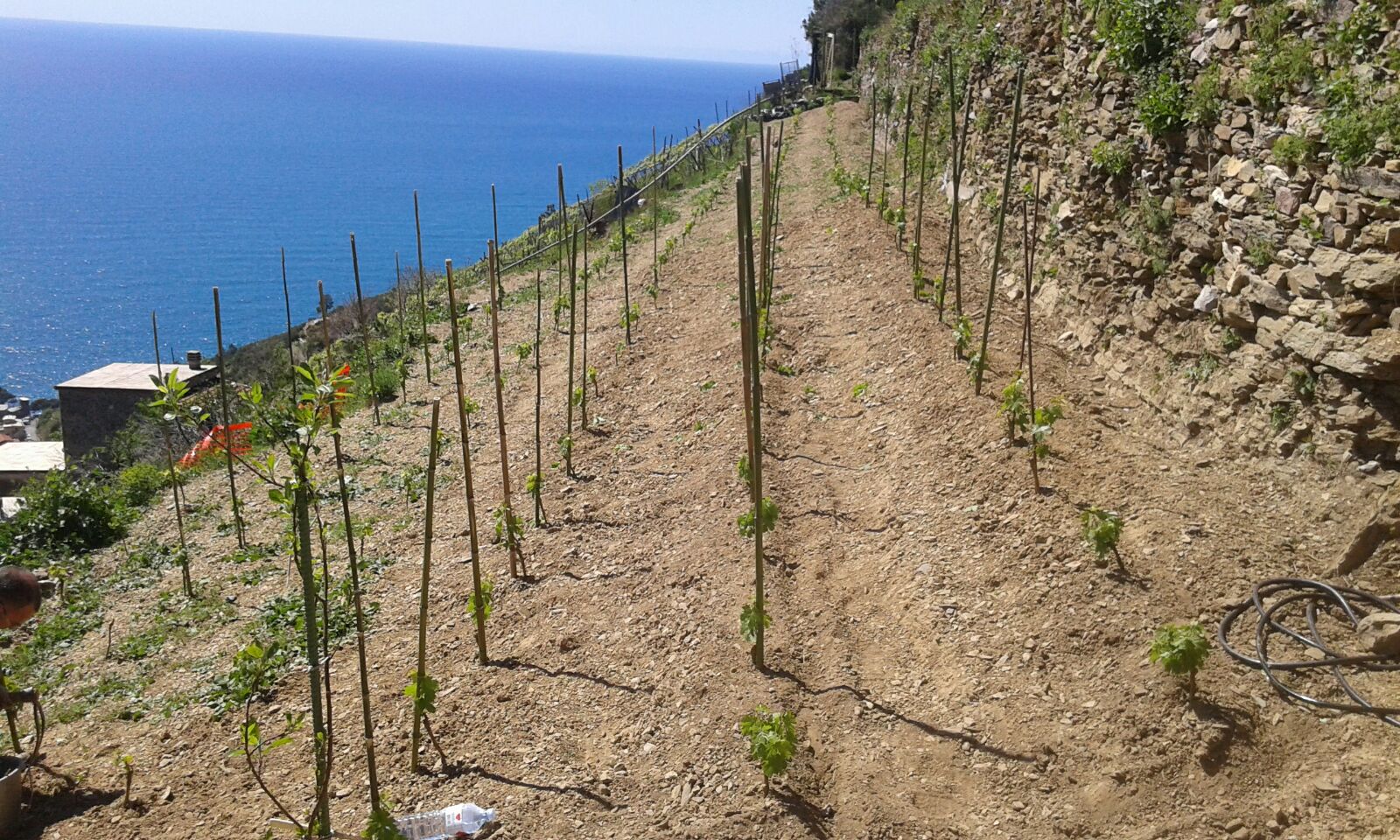
After five years of hobbyist maintenance of the restored vineyard, Finis Terrae officially took shape in 2020: the high and low fields came together, and the first harvest was vinified in a friend’s cellar.
That vintage was particularly challenging: hail damaged the vineyards, wild boars invaded the high plot, and Luca himself was hit by a truck the day before harvest. Yet, the first 420 bottles of Finis Terrae Cinque Terre DOC 2020 were produced.
From 2021, Luca focused on modernizing the low fields: raising pergolas for easier cultivation, better aeration, and soil management with natural fertilizers and cover crops, allowing ancient vines to recover. Concurrently, he reconstructed numerous dry stone walls, built an irrigation aqueduct from the Strada dei Santuari to the fields, benefiting neighboring farmers, and engineered a motor-pump system for applying phytosanitary products in a more sustainable way.
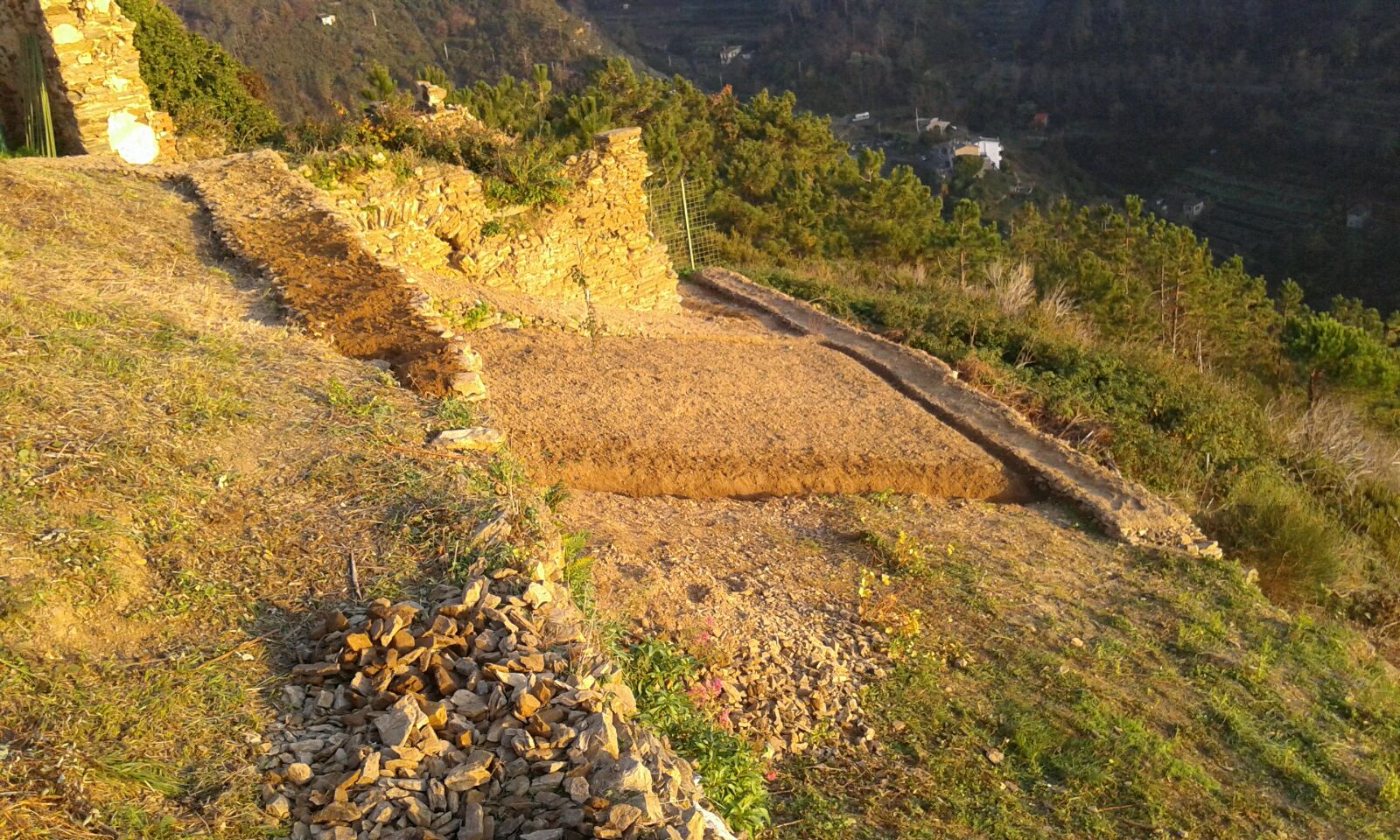
Initial results included 460 bottles of IGT Liguria di Levante white wine and just over 70 bottles of Refursà passito red in 2021. With vine maturation and vineyard recovery, 2022 saw about 2,000 bottles split between two whites (IGT Novale and DOC Traàcosta) and slightly over 100 bottles of Refursà passito red.
In 2023, Luca left his work as a psychologist to dedicate himself fully to the farm. He rented adjacent plots in the Cà di Zanetto area, maintaining nearly one hectare solo, reaching the farm’s maximum production of just under 5,000 bottles between Novale and Zaneto whites, the latter dedicated to the new zone, and reds.
In 2024, Finis Terrae changed its production cellar and slightly reduced output, partly selling small quantities of grapes and partly due to another wild boar incursion. Four new lines emerged: “Thalassa,” combining grapes from Costa Novale and Cà di Zanetto; “Nelson the Novale Boar,” from grapes that survived the attack; “Rosso ma non troppo”; and Refursà as a white passito in dialogue with the classic Sciacchetrà.
In 2025, Luca refocused exclusively on Costa Novale plots with Finis Terrae, while the rented Cà di Zanetto fields formed a new company aiming to continue restoration work with more manpower.
The company, named after the area, is Zaneto (the same name of a Finis Terrae wine). Work on the Zaneto srl project can be followed on Instagram at Zaneto_5terre.
Today, Finis Terrae continues its agricultural, productive, and research work on the slopes of Costa Novale, producing 1,500–2,000 bottles per year. Direct sales and tastings are available at the shop in Piazzale della Chiesa, Riomaggiore, Via Pecunia 118.
LE NOSTRE RADICI
Nel nostro riassunto la storia dell'azienda inizia nel 2015, con l'inizio del recupero di un vigneto distrutto da un incendio anni prima, ma ovviamente per chi avrà voglia di leggere quanto segue c'è molto di più. Il presente racconto, che non vuole ergersi a storiografia, si dirama da fonti proprie di quest'ultima materia, da memorie dirette ed indirette, parte logica e deduzione, parte libri o frammenti recuperati personalmente.
Iniziamo col dire che la storia dell'azienda vera e propria sarebbe ancora più recente, dato che Finis Terrae è stata fondata nel 2020 in occasione della prima produzione di vino: quelle 420 sudate bottiglie prima citate, ottenute da due vigneti sulle pendici di Costa Novale, Riomaggiore.
Per comodità il vigneto superiore, quello recuperato dopo l'incendio e che è il motore di questa storia, d'ora in poi sarà definito come alto (circa 270m slm) mentre quello ricevuto in eredità poco sotto, che menzioniamo per la prima volta, sarà chiamato basso (ca 220m slm).
Passiamo quindi a citare gli attori più recenti di questa storia che, con il loro lavoro, hanno permesso la nascita dell'azienda: Luca ed il padre Umberto con ruolo attivo, ma, soprattutto, per iniziare il nostro approfondimento, il nonno Giuseppe e lo zio Gianfranco, seppur ignari di quanto si sarebbe originato.
È tempo di passare ad analizzare il contesto che permeava la vita di tre differenti generazioni e, senza il quale, non ci sarebbe possibile immedesimarci nella vita e spiegare le motivazioni di chi ci ha preceduti:
La prima generazione è quella di Giuseppe e della moglie Elva (tralasciamo tutta la retorica che gioverebbe allo story telling contemporaneo sul ruolo delle donne ma che non ci interessa cavalcare e che diamo per normale ed assodata); la seconda quella dei figli Umberto, padre di Luca, e Gianfranco, rispettivamente fratello e zio; la terza in esame, ma ovviamente non ordinata cronologicamente, è quella dei genitori di Giuseppe ma soprattutto di Elva, la cui famiglia già era stanziata a Riomaggiore.
Sarebbe inopportuno e contrario a quanto propostoci all'inizio fare affermazioni certe su cosa significasse per quest'ultima generazione il lavoro agricolo, ed in vigna in particolare, ma certamente era il lavoro, od uno dei lavori, che permetteva il sostentamento quotidiano. Più certo è il quadro che si può fare della generazione successiva, quella di Giuseppe ed Elva, che, seppur nel dopoguerra avessero trovato opportunità lavorative in La Spezia, avevano ancora interiorizzata l'idea del lavoro in vigna come necessario per la propria economia. Questo primo o secondo lavoro, infatti, non era un mero portare avanti le tradizioni ma una vera e propria entrata importante ricavata dalla vendita dei prodotti: uva, vino, Sciacchetrà (che probabilmente al tempo non aveva ancora assunto tale nome frutto della necessità di etichettare un prodotto per definirne storia, caratteristiche e comunicarlo commercialmente, ma veniva piuttosto semplicemente chiamato Refursà). Quest'ultimo in particolare aveva anche la funzione di baratto per prestazioni di natura professionale ad alto valore percepito, vedasi quelle di medici, notai ed avvocati (né più né meno dei capponi di Renzo per l'azzecca-garbugli). È importante capire che, per quanto nel momento attuale il mantenimento delle tradizioni abbia un forte valore e sia qualcosa cui aspirare, per questa generazione invece il lavoro in vigna era ancora una necessità o, perlomeno, così era percepito come frutto del retaggio infuso ed esperito.
Infine, con la generazione di Umberto e Gianfranco, con opportunità lavorative sempre più esaustive, si ha il cambio di passo nella percezione da lavoro agricolo vero e proprio a dimensione più hobbistica e di mantenimento delle tradizioni, seppur è lecito credere che in molti non fossero coscienti di stare mantenendo vivi tali costumi, ma piuttosto proseguissero perché così era la normalità cui erano stati educati, in una sorta d'inerzia priva d’intenzionalità (non per questo meno soddisfacente o piacevole). Mentre Umberto prediligeva lavori più fisici come la zappatura manuale, Gianfranco preferiva prendersi cura della vite in toto. È quest’ultimo, infatti, a portare avanti il mantenimento dei vigneti parallelamente al suo lavoro principale, dapprima assieme al padre Giuseppe e poi da solo. la parola chiave su cui concentrarsi per il proseguimento della nostra storia è appunto mantenimento: purtroppo non appena il vigneto alto è andato distrutto dall'incendio non è stato possibile continuare questo lavoro che avrebbe comportato un onere di tempo ed impegno notevolmente maggiori per il recupero, limitando quindi gli sforzi per il vigneto basso salvatosi dalle fiamme.
Arriviamo quindi alla fine di Luglio del 2015: in un clima non proprio adatto, Luca ed alcuni amici effettuano una perlustrazione a piedi alla ricerca dell'appezzamento, tale era lo stato di abbandono di questo che le piante pioniere ed arbustive insediatesi lo avevano reso irriconoscibile dal bosco e dalla macchia mediterranea circostanti. Nonostante ormai esistesse la cremagliera che tanto aiuta gli agricoltori delle Cinqueterre nel mantenimento del paesaggio e nel lavoro agricolo, permettendogli di salire i pendii delle colline terrazzate, il recupero è partito dal sentiero che conduceva ai campi alti, perso in mezzo alla vegetazione poco sopra l'altezza dei campi bassi. Qui si rende necessaria una lunga digressione: perché Costa Novale? Costa Novale è un declivio che discende dalla sommità del monte in località Campione fino al borgo di Riomaggiore, esposta sud-sud-est e ricevente sia i venti da monte che da mare, esposta all'influsso marino ma con un'altitudine già significativa. Non è tuttavia solo per queste condizioni prodighe per la viticoltura che è stata scelta in passato da generazioni a cui non siamo in grado di risalire, ma per motivi anche logistici. La rete sentieristica del Parco Nazionale delle Cinqueterre, seppur in alcuni punti abbandonata, specialmente nei molti camminamenti e scalinate conducenti ad appezzamenti da tempo non più in produzione, è ancora sufficientemente vasta e curata da permettere di avere una visione d’insieme delle vie che permettevano ai nostri avi di muoversi in queste zone. Se si esamina questo noioso elenco a seguire, è facile notare come un trend verificatosi spesso nelle nostre zone si sia qui ripetuto. Ma, prima di spiegarci, vediamo il percorso che questo elenco delinea:
il tratto di sentiero, al momento abbandonato, che dal borgo di Riomaggiore, vicino all'attuale caserma dei carabinieri, conduce fino alla strada litoranea all' inizio del rettilineo prima dello spiazzo della Zorza
il suo proseguimento, prima della costruzione della litoranea ininterrotto, che dalla partenza della cremagliera denominata Tassonara porta fino al crinale sopra Costa Novale, dove si congiunge col sentiero 501
il proseguimento del sentiero 501 che biseca la Strada dei Santuari in località Campione e quindi procede verso la sommità del monte verso Sella della Croce / Foce
il tratto che, una volta svalicato, si inoltra nell'entroterra discendendo nella faccia opposta del monte fino a San Benedetto passando per i paesini di Carpena e della Codeglia
Analizzando l'elenco, probabilmente meglio con una semplice mappa di fronte a noi, possiamo vedere come fosse logisticamente congrua la coltivazione di appezzamenti sulle alture delle Cinqueterre da parte di residenti oltre monte nella Val di Vara. Lo stesso Giuseppe era originario del paesino della Codeglia prima menzionato.
Arrivati a questo punto, cercando di non perdere il filo conduttore, possiamo apportare una serie di suggestioni alla storia:
La prima, e la più breve, è l'evidenza di come le Cinqueterre siano state costruite dall'alto verso mare e non viceversa, come logicamente la storia antica delle civiltà che nascevano presso i fiumi ci farebbe invece supporre. A tal proposito vedasi i lavori sugli antichi nuclei abitativi come Cacinagora.
La seconda suggestione è come il percorso precedentemente descritto fosse effettivamente conosciuto come la "via del latte"(si parla di un’etimologia congrua anche per il nucleo di Cacinagora appena citato) ovvero il sentiero attraverso cui la lattaia portava dall'entroterra (da paesi come San Benedetto, Carpena e la Codeglia appunto) il latte a Riomaggiore e fosse dunque un itinerario consolidato e non una semplice ricostruzione.
La terza considerazione, che è quella meno autenticabile ma che fornisce maggiori spunti riflessivi, è quella sulla natura delle fonti e l'affidabilità di esse, nonché il motivo meno esplicito per cui questo racconto sta venendo scritto (e che spesso porta considerazioni tra parentesi non necessarie). Questo problema non è certo una novità per chi svolge mestieri attinenti alla storiografia e sarebbe un argomento troppo vasto per questa storia e tecnico per le competenze di chi scrive. Quello che però di peculiare si può ravvisare, nel piccolo della nostra realtà, è come la tematica in questione sia ancora di più inflazionata.
La prima premessa necessaria per capire questo fenomeno è che il nome delle Cinqueterre vende e porta visibilità, dunque è non condivisibile ma facilmente capibile come si cerchi di farne uso improprio; la seconda, e più importante perché ci è dato potere su di essa, è capire come anche dove vi è buona fede, piuttosto che interessi commerciali impropri, spesso si sfoci in una retorica romanzata che, sotto l’etichetta di “viticoltura eroica” e di tutte le parole che è possibile collegare ad essa (da “fatica” al più moderno termine di “resilienza”) ottiene invece l’effetto di omologare e svuotare di contenuto quello che si fa e realmente si è fatto in passato. Etichette che hanno effetto su un pubblico che vuole emozioni istantanee e sintetiche, brevi epiteti cosparsi di aulicità, immediatezza e vistosità in una sorta di trailer di un film epico che non verrà mai guardato né girato.
Nel reperire le fonti che hanno reso possibile la stesura di questo excursus, reperite a livello hobbistico e non professionale, è stato possibile notare come manchino dei pezzi di storia sulla viticoltura e la vita alle Cinqueterre.
Tra le guerre mondiali ed il fortunato avvento della Doc Cinqueterre ad opera del lavoro di molti pionieri, si sono persi molti scampoli di conoscenza. Scampoli che nel raccontare un prodotto ed una storia era necessario fornire e, spesso in buona fede, sono stati commessi errori (gli stessi che potrebbe stare commettendo chi scrive questo racconto), probabilmente dettati anche da bias psicologici frutto di un errato contesto dato dalle etichette di cui si parlava precedentemente. Per uscire da questa trattazione, che sta esulando dagli scopi del racconto, si fornisce qualche esempio: è così che l’autedo, ovvero il pergolato, è diventato il metodo tradizionale di allevamento alle Cinqueterre, cosa che da fonti verificabili sembra invece essere stata introdotta poco più di cent’anni orsono; è così che l’appassimento dell’uva rossa per produrre quello che oggi verrebbe definito “Sciacchetrà rosso” si è persa e molte altre ancora. Tutto ciò avviene in uno story telling che innalza i nostri avi, ed i pochi agricoltori attuali, ad eroi appunto. Il paradosso di ciò, tuttavia, è che innalzandoli in tal modo invece che rappresentali come gli esseri umani che erano e parlare del vero lavoro che essi svolgevano, li stiamo invece svuotando delle loro competenze e abilità, romanzando la poca conoscenza che abbiano disponibile nell’immediato e tralasciandone molta.
Tenendo a mente ciò, è possibile tornare alla nostra lattaia: che quest'ultima portasse la brocca del latte in testa lungo tutto questo sentiero non è inverosimile per la mole di passi e la fatica in sé cui ai tempi si era soliti, ma piuttosto per la quantità di latte che potesse effettivamente essere trasportata e quanto questa esigua quantità potesse essere utile ad un paese come Riomaggiore, che pur non avendo mucche avrà sicuramente avuto pecore e capre per avere una minima produzione. È più lecito pensare ad una visione meno romantica, con quantitativi di latte più ingenti magari trasportati da muli o piuttosto parlare di prodotti caseari più che di latte in sé. Non è questo il luogo di approfondimenti in merito ma anche qui il suggerimento riguarda la consultazione del lavoro sulla "via del latte" di Monterosso, che al contrario di quella di Riomaggiore, pur rimanendo una storia molto di nicchia, è conosciuta e può, probabilmente e con adattamenti territoriali, essere trasposta nel nostro contesto
L'ultimo spunto ci permette di riappropriarci del filo conduttore perso nelle considerazioni precedenti, e si riconnette al primo punto (la colonizzazione da monte), ovvero il fatto che a mezza costa fossero presenti insediamenti abitativi più o meno stanziali. Questo accade anche in Costa Novale dove in corrispondenza dei campi alti è tutt'ora presente un vistoso rudere composto da una casa a ben tre piani ed una stalla adiacente ad essa. Il crollo del tutto, eccetto i muri perimetrali, è relativamente recente in quanto gli stessi Umberto e Gianfranco hanno avuto possibilità di vedere il tutto in opera e Giuseppe ne ha abbondantemente usufruito nel suo lavoro agricolo. In questo caso le costruzioni non erano un vero e proprio insediamento abitativo permanente bensì una sistemazione per i giorni di lavoro più intensi. Infatti, mentre alcune lavorazioni venivano fatte in giornata per poi ritornare a piedi nell'entroterra, altre più onerose richiedevano la permanenza per più giorni in loco, pertanto più famiglie, o nuclei famigliari estesi, possedevano in questo caso ognuna un piano della casa e si occupavano di un appezzamento intorno ad essa. Giuseppe, e molti altri prima di lui, si occupavano dell'appezzamento lato mare di circa 2000mq, lo stesso da cui siamo partiti e che sarebbe stato distrutto dall' incendio ad inizio anni duemila.
Prima di tornare al nostro racconto è opportuno rispondere alla domanda di come quelle case fossero sorte in quel punto. Nei tempi remoti, senza le moderne possibilità di trasporto, il materiale lapideo per la costruzione dei muri a secco a sostegno dei terrazzamenti era reperito in loco. Nel momento in cui l'estrazione del materiale da un sito aveva esaurito lo scopo ed era stata bastevole per i campi circostanti, se la qualità del materiale estratto veniva giudicata positivamente si continuava a sfruttare il sito come cava (è il caso per esempio dello “spaccato” nel monte antistante Costa Novale), altrimenti veniva abbandonato con l'evocativo nome di "ravaneto", dal dialetto "ravanare"; ovvero andare a grattare per terra prendendo tutto il salvabile. Fatto sta che questi siti abbandonati avevano esattamente la struttura di uno scavo per erigere fondazioni; pertanto, spesso venivano sfruttati per andare a realizzare dimore con gli scopi precedentemente citati.
Nell'inizio dell'Agosto 2015 il tratto di sentiero che dalla partenza della cremagliera sulla strada litoranea giunge fino ai campi alti è stato ripulito e si è giunti all'appezzamento. Questo viene mano a mano disboscato e quindi Umberto procede alla zappatura manuale, dapprima dei due campi più bassi e poi di tutto l'appezzamento. Luca, che aveva impostato la cosa come passatempo mentre stava finendo il suo percorso di laurea, aveva in animo di piantare il tutto ad ulivi, coltivazione che richiedeva meno impiego di risorse temporali e con la quale aveva più confidenza avendo passato l'infanzia con il nonno materno che nelle colline di Spezia curava degli ulivi pluricentenari, piuttosto che con il nonno paterno Giuseppe dedito alla viticoltura. Tuttavia, Simone, uno degli amici con i quali aveva effettuato la prima ispezione dei campi, lo convinse a ripristinare il vigneto. Luca, grazie al lavoro di zappatura del padre, si occupò di ricostruire, nel corso del tempo, i muri a secco, curare il sesto d’impianto a filari ecc…
Fu così che dopo cinque anni di mantenimento hobbistico del nuovo vigneto, nel 2020, prese forma Finis Terrae: ad i campi alti si unirono i bassi, lasciati lo stesso anno dallo zio, e si arrivò alla prima vendemmia vinificata ospite nella cantina dell' amico stesso. L'annata fu particolarmente complicata, dapprima i vigneti furono colpiti dalla grandine, poi i cinghiali riuscirono ad irrompere nell'appezzamento alto e, come se non bastasse, lo stesso Luca venne investito il giorno prima della vendemmia. Tuttavia, nonostante tutto, nacquero le prime 420 bottiglie di Finis Terrae doc Cinqueterre anno 2020.
Dal 2021 l'impegno di Luca si concentrò sul modernizzare il più possibile anche i campi bassi, rialzando i pergolati per una più agevole coltivazione, maggior areazione e possibilità di lavorazione del terreno con concimazione naturale e sovescio, permettendo alle antiche viti presenti di recuperare e rinforzarsi. Di pari passo la ricostruzione di svariati muri a secco, la realizzazione di un acquedotto irriguo che discende dalla prima menzionata Strada dei Santuari fino ai campi di proprietà stessi, e porta beneficio anche a quelli di altri agricoltori, e l'ingegnerizzazione di un impianto con motopompa per l'applicazione dei prodotti fitosanitari, sono tutte opere che vengono realizzate in prima persona.
Dapprima con risultati poco salienti giungendo alla produzione di 460 bottiglie di vino bianco IGT Liguria di Levante nel 2021 e poco più di 70 bottiglie di passito rosso Refursà 2021, poi, rapidamente, con il nuovo vigneto alto che acquista in età e potenziale ed il basso che recupera vigore, si arriva nel 2022 alla produzione di circa 2000 bottiglie suddivise equamente in due linee di bianco (IGT Novale e Doc Traàcosta) e poco più di un centinaio di bottiglie di Refursà passito rosso.
Nel 2023 Luca interrompe il suo lavoro come psicologo e decide di dedicarsi completamente all'azienda agricola. Sfrutta il maggior tempo a sua disposizione per prendere in affitto i campi adiacenti nello zonale di Cà di Zanetto, arrivando a manutenere poco meno di un ettaro in solitaria. Qui si raggiunge la produzione massima dell'azienda che si attesta a poco meno di 5000 bottiglie tra i due vini bianchi Novale e Zaneto, quest'ultimo dedicato al nuovo areale, e vino rosso.
Nel 2024 Finis Terrae cambia cantina di produzione e riduce leggermente la produzione, in parte vendendo piccole quantità delle uve e in parte a causa di una nuova incursione dei cinghiali nei campi in affitto. Nascono così quattro nuove linee: "Thalassa" che unisce le uve dei due areali, Costa Novale e Cà di Zanetto, "Nelson il Cinghiale del Novale" con le uve sopravvissute all'attacco dei cinghiali in quella porzione di vigneto, "Rosso ma non troppo" e "Refursà" in versione passito bianco in dialettica con lo sciacchetrà classico
Nel 2025, Luca, decide di tornare a concentrarsi unicamente sui campi di proprietà di Costa Novale con Finis Terrae e di confluire invece i campi presi in affitto di Cà di Zanetto in una nuova società che si propone, con un maggior impiego di forza lavoro, di proseguire il lavoro da lui iniziato di sistemazione e recupero di nuovi terreni sulla collina. La società prenderà il nome dell'areale, che già era stato di un vino prodotto da Finis Terrae stessa, ovvero Zaneto (potete seguire il lavoro di recupero della Zaneto srl su Instagram Zaneto_5terre ) Finis Terrae, ad oggi, prosegue il suo lavoro agricolo, produttivo e di ricerca sulle pendici di Costa Novale. Produce tra le 1500 e 2000 bottiglie l'anno; svolge inoltre attività di vendita diretta e degustazione presso il punto vendita sito sul Piazzale della Chiesa di Riomaggiore in via Pecunia 118.
ADDRESS
Via Pecunia 118,
Riomaggiore (SP),
Italia
FOLLOW
@FinisTerrae 2026. All rights reserved